


LiteLLM / Trivy Supply Chain Attack 2026
Security Incident in the LiteLLM Ecosystem
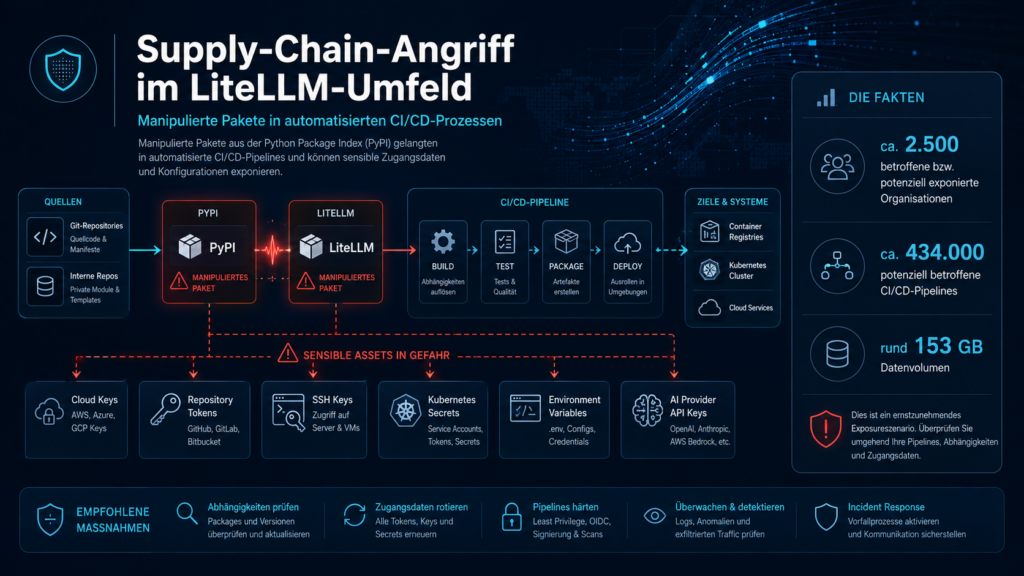
In March 2026, malicious packages associated with LiteLLM were distributed via PyPI. Although the compromised versions were available only for a short period of time, they had the potential to reach automated build, test, and deployment processes. This is particularly critical because CI/CD environments often have extensive privileges and access to sensitive credentials, including cloud credentials, repository tokens, SSH keys, Kubernetes secrets, and API keys for AI providers.
Public reports indicate that approximately 2,500 organizations may have been affected or potentially exposed, around 434,000 CI/CD pipelines may have been involved, and approximately 153 GB of data may potentially have been exfiltrated. Being listed in the corresponding datasets does not automatically mean that a successful attack or compromise has actually taken place. Nevertheless, companies should use this incident as an opportunity to conduct a technical review of their systems, investigate potential compromises, and proactively rotate potentially affected credentials.
Are Your Systems Affected?
In connection with the malicious LiteLLM packages, many organizations are now facing the question of whether their own development, build, or deployment environments may have been affected.
To support an initial structured assessment, we have created a practical guide for assessing potential exposure.
The guide helps IT, DevOps, and security teams to:
- identify relevant systems and CI/CD pipelines,
- verify the package versions in use,
- identify potential exposure points,
- determine which credentials and secrets require particular attention, and
- assess when additional measures may be necessary.
Potential exposure does not automatically mean that a successful attack or data exfiltration has occurred.
What matters is a structured and traceable technical assessment that enables organizations to reliably evaluate their risk and, where necessary, respond quickly.
Our guide for assessing potential exposure is available here for free download.